
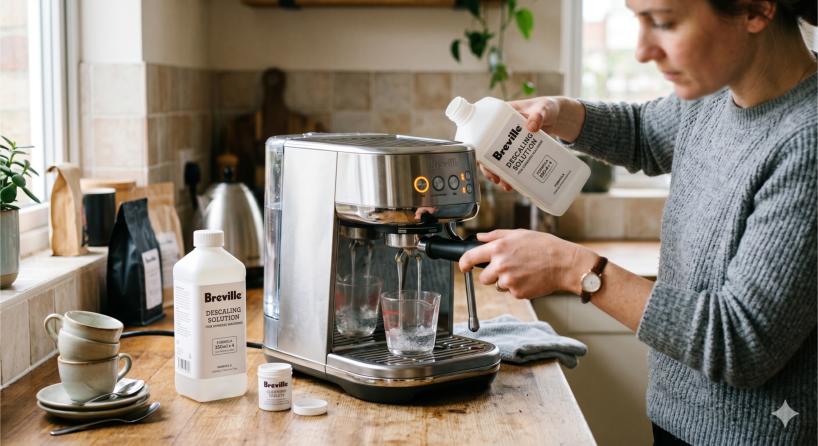
How to Descale Your Breville Espresso Machine
Affiliate disclosure. This post may contain affiliate links. As an Amazon Associate, I earn from qualifying purchases made through Amazon.com and Amazon.ca, at no extra cost to you. Prices and availability are subject to change.
Maintaining your Breville espresso machine is crucial for ensuring its performance and longevity. One important aspect of this maintenance is descaling, especially if you reside in an area with hard water. This guide provides a comprehensive overview of the descaling process for your Breville espresso machine, allowing you to enjoy great coffee consistently.
Direct Answer
To descale your Breville espresso machine, it is recommended to use a descaling solution that is specifically designed for coffee machines. Follow the instructions provided by the manufacturer to run the descaling cycle. This usually involves mixing the solution with water and running it through your machine. Regular descaling is vital as it helps prevent mineral buildup, ensuring your espresso maintains its flavor.
Key Facts
- Descaling is essential for removing mineral buildup that can impact the taste and functionality of your machine.
- Breville suggests using their own descaling solution, but there are compatible options available.
- It is advisable to descale every 2 to 3 months, or more often if you have hard water.
- Common descaling solutions include Essential Values (12 uses) and Roobi (2 uses).
Problem/Context
Many home baristas transition from single-serve pod machines to more advanced espresso machines, such as those from Breville. These machines offer improved flavor and customization options but require more regular maintenance. As water flows through the machine, minerals can accumulate, which may lead to clogs and impact the brewing temperature. For instance, a beginner using a Breville Barista Pro may experience slower water flow if descaling is neglected, resulting in over-extraction and bitter shots.
For those who have upgraded to a Breville Barista Express, using hard water can quickly diminish the machine’s performance. Regular descaling is a practical measure that helps ensure your machine continues to produce high-quality espresso, preventing potential repairs or replacements in the future.
Step-by-step Plan
To effectively descale your Breville espresso machine, follow these steps:
- Gather Your Materials: You will need a descaling solution (either Breville’s or a compatible one), a clean container, and fresh water.
- Prepare the Solution: Mix the descaling solution with water according to the package instructions. For example, if using Essential Values, dilute as directed for your machine.
- Fill the Water Tank: Pour the mixed solution into the water tank of your espresso machine, ensuring it is filled to the appropriate level.
- Start the Descaling Cycle: Turn on your machine and activate the descaling mode. This process may differ by model; refer to your user manual for specific instructions.
- Flush the System: After the descaling cycle is complete, run a few cycles with fresh water to rinse any remaining solution from the system.
- Check the Descale Light: If the descale light remains on after your first attempt, repeat the cycle and ensure that all steps have been correctly followed.
For more detailed guidance on specific models like the Barista Pro or Barista Express, you can check out our articles on choosing your first espresso machine and affordable espresso machines.
Common Mistakes
- Not descaling frequently enough: Neglecting this maintenance step can lead to significant mineral buildup and machine malfunctions.
- Using vinegar: Although vinegar is a common household descaler, it can leave residues that negatively affect flavor. Always opt for a product specifically designed for espresso machines.
- Ignoring the manufacturer’s instructions: Each model may have specific requirements; not following these can void your warranty.
For example, if a user attempts to descale their Breville Barista Express with vinegar instead of a proper solution, they might encounter lingering tastes that ruin future brews.
Practical Checklist
To ensure a successful descaling process, follow this checklist:
- Have the appropriate descaling solution ready.
- Carefully follow the manufacturer’s instructions.
- Run a rinse cycle after descaling to eliminate any remaining solution.
- Monitor the descale light; if it stays on, repeat the process.
- Establish a regular descaling schedule based on your water hardness.
If you find that descaling does not resolve performance issues, it may be time to seek professional assistance. Consider consulting a technician if your machine continues to malfunction after routine maintenance.
FAQ
Can I use descaling tablets for my Breville espresso machine?
Breville espresso machines can be descaled using specific descaling tablets designed for coffee machines. These tablets dissolve in water and effectively break down mineral buildup. Breville recommends their own descaling tablets for optimal results, but there are also compatible options available that can be just as effective.
How do I descale my Breville Barista Pro?
To descale the Breville Barista Pro, use a descaling solution and follow the machine’s descaling mode instructions. Start by mixing the descaling solution with water as per the instructions, then fill the water tank and activate the descaling cycle. After completion, run a few cycles with fresh water to ensure all solution residues are flushed out.
How often should I descale my Breville espresso machine?
It is recommended to descale your Breville espresso machine every 2 to 3 months. This frequency may vary depending on your water hardness; if you live in an area with hard water, you might need to descale more often. Regular descaling helps maintain the machine’s performance and prolongs its lifespan.
Can I descale my Breville espresso machine with liquid descaler?
To descale your Breville espresso machine with liquid descaler, follow these steps: mix the solution with water, fill the tank, and activate the descaling mode. First, prepare the descaling solution according to the manufacturer’s instructions. Pour it into the water tank, then turn on the machine and select the descaling option. After the cycle is complete, flush the system with fresh water to remove any remaining solution.
Is vinegar a good option for descaling my Breville espresso machine?
While vinegar can be used, it is not recommended; however, if you choose to, mix equal parts vinegar and water and run it through the machine. Fill the water tank with the vinegar solution and start the brew cycle. Afterward, run several cycles with fresh water to ensure all vinegar residues are removed, as vinegar can affect the taste of your coffee.
What can I use to descale my Breville espresso machine if I don’t have a solution?
If you don’t have a descaling solution, you can use a mixture of water and citric acid as an alternative. Mix about 1-2 tablespoons of citric acid with a liter of water and pour it into the water tank. Activate the descaling cycle, and once complete, run multiple cycles with clean water to rinse out any remaining citric acid.
How do I descale my Breville Bambino?
To descale the Breville Bambino, use a suitable descaling solution and follow the specific instructions for your model. Prepare the descaling solution as directed, fill the water tank, and activate the descaling function. After the process is complete, flush the machine with fresh water to ensure all traces of the solution are eliminated.
What products should I use to descale my Breville espresso machine?
You can use Breville’s own descaling solution or compatible products like Essential Values or Roobi. Breville’s solution is specifically formulated for their machines, ensuring effective descaling without damaging components. Essential Values is a popular alternative that offers multiple uses, while Roobi provides a convenient option for those looking for a quick solution.
For more tips on maintaining your espresso machine and ensuring the best coffee experience, learn more about our recommended products and maintenance guides.